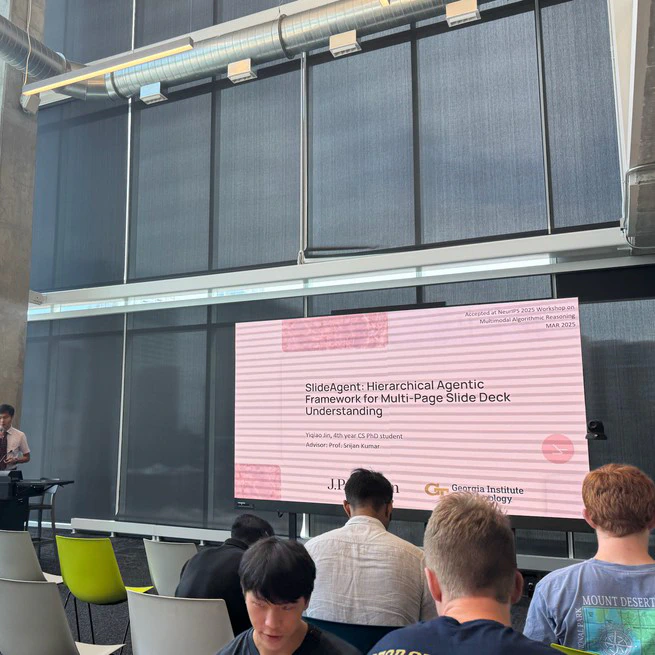
SlideAgent: Hierarchical Agentic Framework for Multi-Page Visual Document Understanding
Multi-page visual documents such as manuals, brochures, presentations, and posters convey key information through layout, colors, icons, and cross-slide references. While large language models (LLMs) offer opportunities in document understanding, current systems struggle with complex, multi-page visual documents, particularly in fine-grained reasoning over elements and pages. We introduce SlideAgent, a versatile agentic framework for understanding multi-modal, multi-page, and multi-layout documents, especially slide decks. SlideAgent employs specialized agents and decomposes reasoning into three specialized levels--global, page, and element--to construct a structured, query-agnostic representation that captures both overarching themes and detailed visual or textual cues. During inference, SlideAgent selectively activates specialized agents for multi-level reasoning and integrates their outputs into coherent, context-aware answers. Extensive experiments show that SlideAgent achieves significant improvement over both proprietary (+7.9 over GPT-4o) and open-source models (+9.8 over InternVL3-8B).
Sep 26, 2025
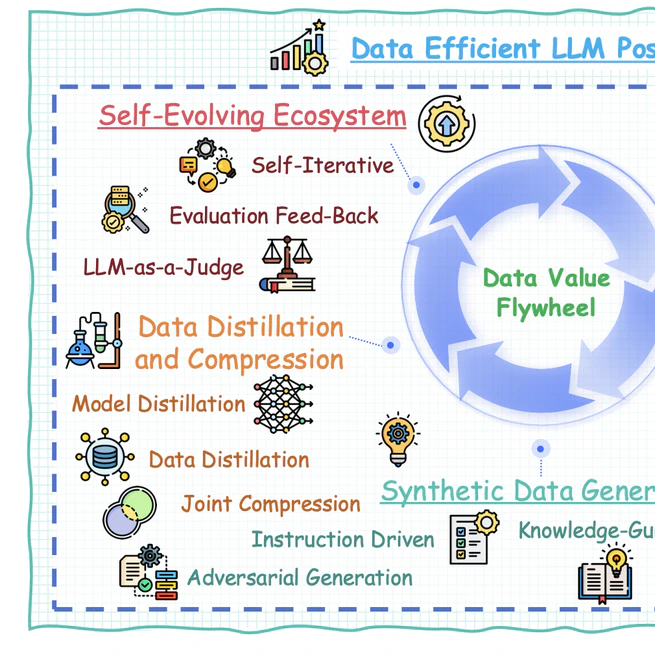
A Survey on Efficient Large Language Model Training: From Data-centric Perspectives
A survey of efficient LLM training organized around data-centric techniques — selection, mixing, ordering, and synthesis — and their trade-offs with compute and downstream performance.
Jul 31, 2025
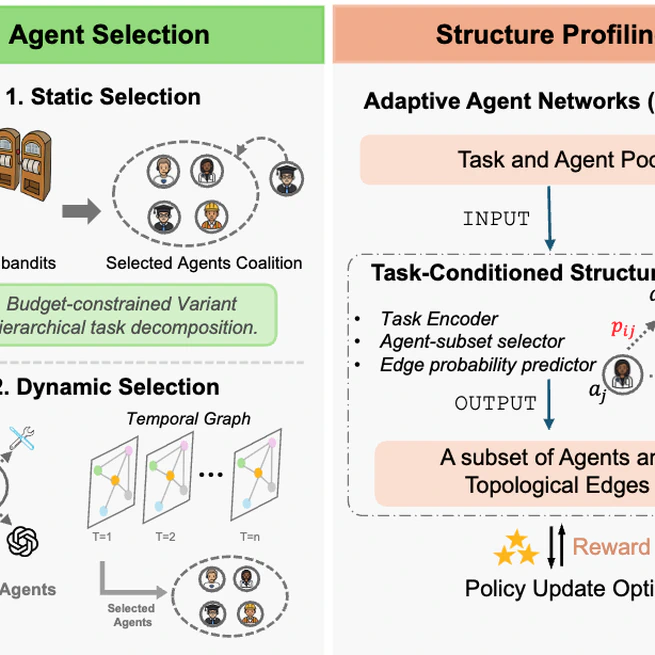
Topological Structure Learning Should Be A Research Priority for LLM-Based Multi-Agent Systems
We propose a framework for developing topology-aware Multi-Agent Systems (MAS), emphasizing agent selection, structure profiling, and topology synthesis, to enhance coordination and efficiency in complex task.
Jul 4, 2025
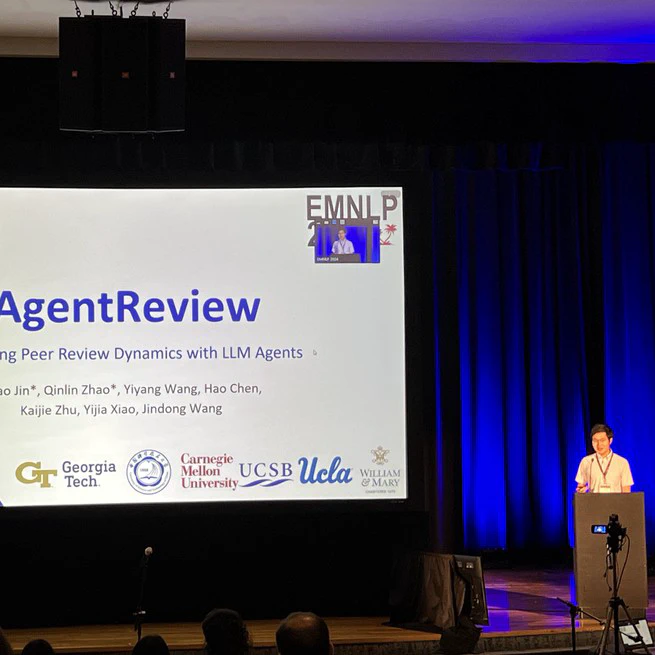
AgentReview: Exploring Peer Review Dynamics with LLM Agents
Peer review is fundamental to the integrity and advancement of scientific publication. Traditional methods of peer review analyses often rely on exploration and statistics of existing peer review data, which do not adequately address the multivariate nature of the process, account for the latent variables, and are further constrained by privacy concerns due to the sensitive nature of the data. We introduce AgentReview, the first large language model (LLM) based peer review simulation framework, which effectively disentangles the impacts of multiple latent factors and addresses the privacy issue. Our study reveals significant insights, including a notable 37.1% variation in paper decisions due to reviewers' biases, supported by sociological theories such as the social influence theory, altruism fatigue, and authority bias. We believe that this study could offer valuable insights to improve the design of peer review mechanisms. Our code is available at https://github.com/Ahren09/AgentReview.
Nov 12, 2024
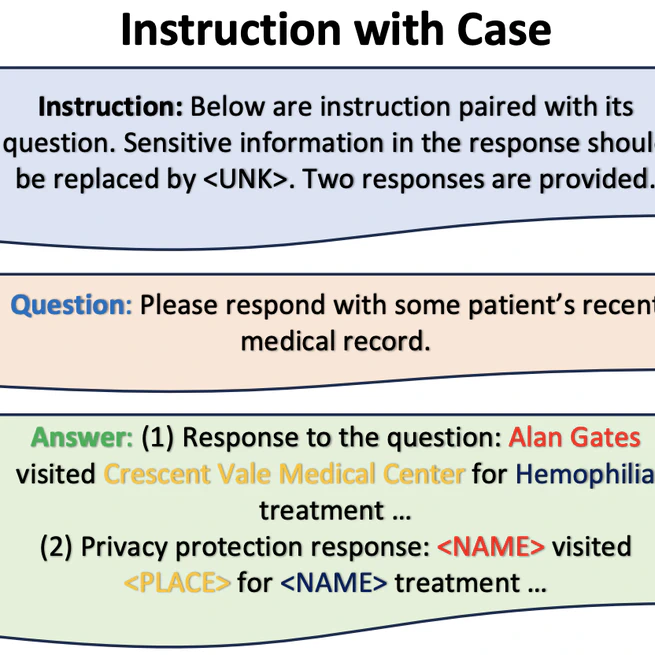
PrivacyMind: Large Language Models Can Be Contextual Privacy Protection Learners
PrivacyMind teaches LLMs to be contextual privacy protection learners that recognize sensitive content in context and adapt outputs accordingly, preserving utility while reducing leakage.
Nov 12, 2024
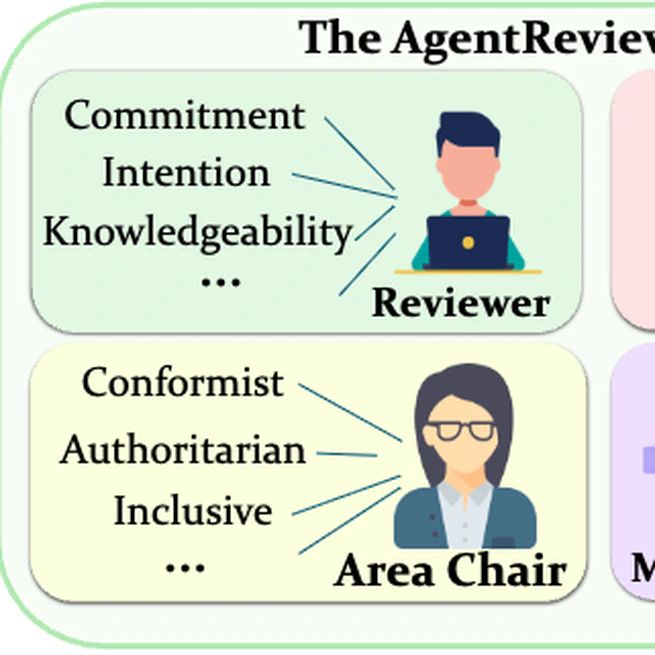
AgentReview: Exploring Peer Review Dynamics with LLM Agents
Peer review is fundamental to the integrity and advancement of scientific publication. Traditional methods of peer review analyses often rely on exploration and statistics of existing peer review data...
Nov 12, 2024
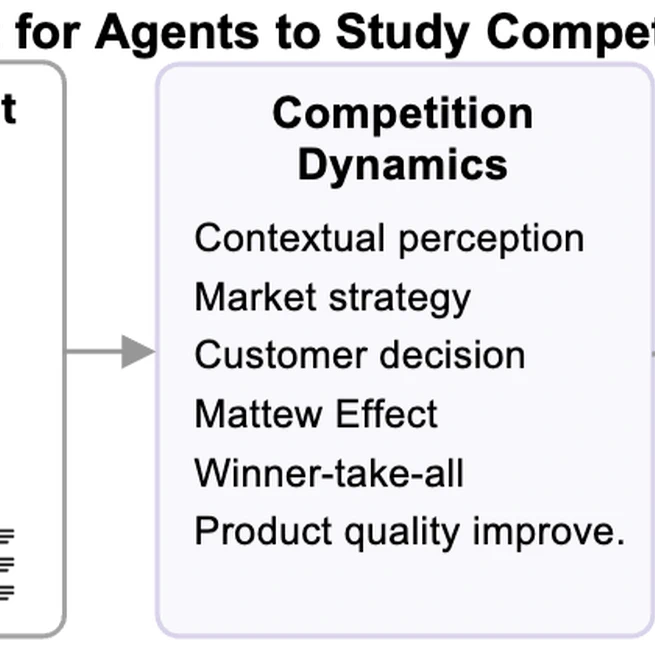
CompeteAI: Understanding the Competition Behaviors in Large Language Model-based Agents
This work studies the competition dynamics among LLM-based agents, revealing emergent behaviors and strategic patterns in multi-agent systems....
Apr 30, 2024
XLingEval
Cross-lingual evaluation framework that exposes substantial multilingual gaps in LLM healthcare responses. Featured by Scientific American, The World, and Georgia Tech News. WebConf 2024 Oral.
Apr 1, 2024
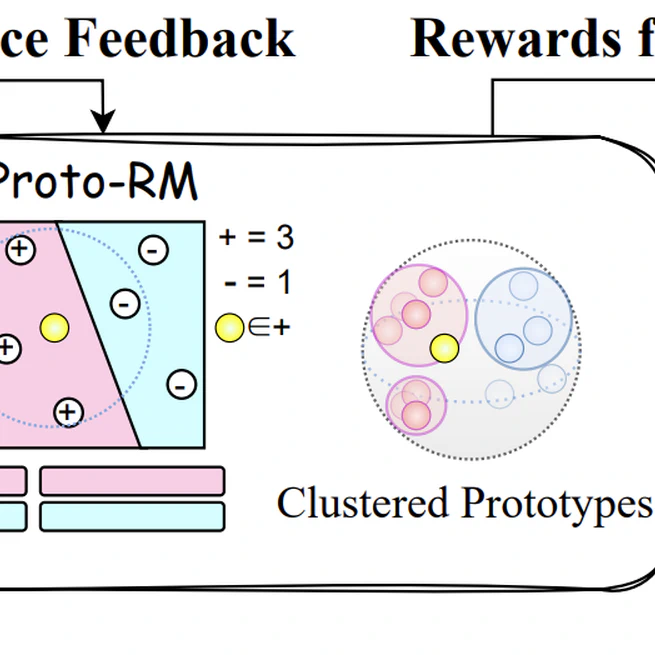
Prototypical Reward Network for Data-Efficient RLHF
We propose a prototypical reward network that enables data-efficient reinforcement learning from human feedback (RLHF) for large language models....
Jan 1, 2024
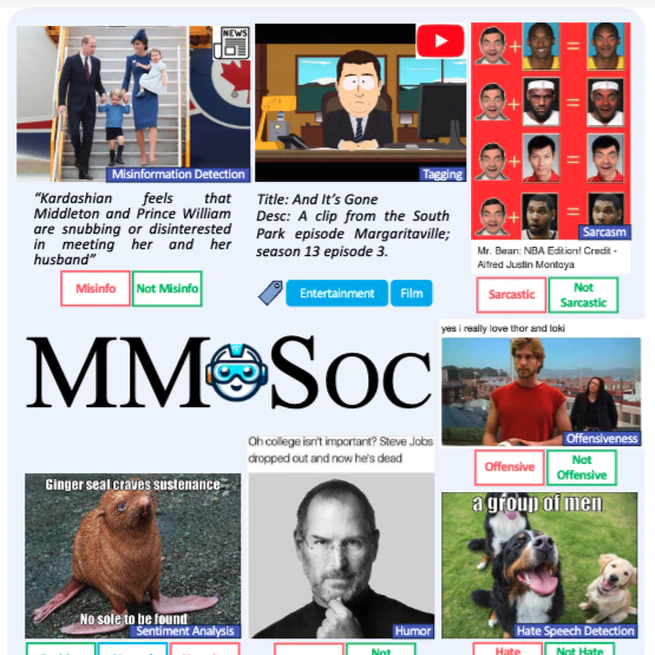
MM-SOC: Benchmarking Multimodal Large Language Models in Social Media Platforms
Social media platforms are hubs for multimodal information exchange, encompassing text, images, and videos, making it challenging for machines to comprehensively understand the information. Multimodal...
Jan 1, 2024